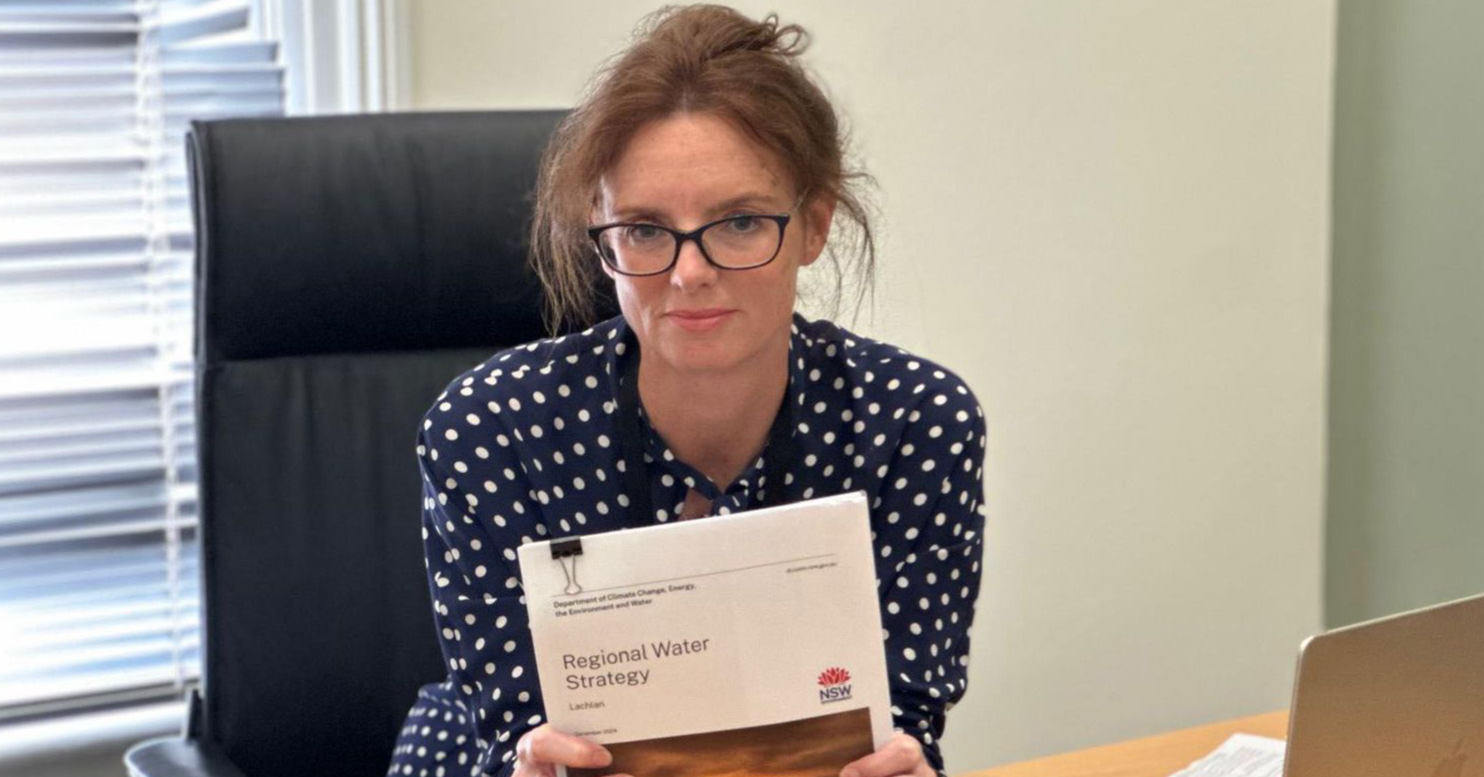
Steph Cook MP has described the new Lachlan Regional Water Strategy as woefully inadequate.
Member for Cootamundra Steph Cooke has condemned the Minns Labor Government’s Lachlan Regional Water Strategy, describing it as a wasted opportunity marked by delays and diminished vision that leaves communities vulnerable to future droughts and floods.
The recently released strategy, delayed since the Minns Government took office in early 2023, falls far short of what is needed to secure water resilience for the Lachlan Valley. It follows extensive consultation undertaken by the previous Coalition Government from 2020 to 2022, culminating in a comprehensive draft strategy centred on raising the Wyangala Dam wall—a project critical for drought resilience and flood mitigation.
However, the Minns Labor Government scrapped this ambitious plan, instead re-releasing a pared-down “shortlist of actions”.
“After undermining the business case for raising the Wyangala Dam wall, the Minns Labor Government has taken our region backwards,” Ms Cooke said.
Ms Cooke described the Minns Labor Government’s new strategy as woefully inadequate, offering no tangible solutions.
“Two years on, we’ve been handed a report that commits to little more than ‘investigating’ water reliability measures. There is no commitment to building infrastructure, no strategy for carp control, and no plan to replenish the Lachlan system while diverting water to the Macquarie Valley,” she said.
Ms Cooke said the absence of significant infrastructure projects, particularly the decision to scrap the Wyangala Dam wall raising, highlights a glaring lack of leadership.
“Since scrapping the Wyangala Dam wall-raising project, the NSW Government is yet to propose any alternative that provides even a fraction of the water security, flood mitigation, and drought resilience that this region desperately needs,” she said.
“The Minns Government has effectively told Lachlan Valley communities to wait five, ten, or even twenty years for outcomes that are currently unfunded. This is an insult to the people of our communities who rely on secure water for their livelihoods, towns, and industries.”