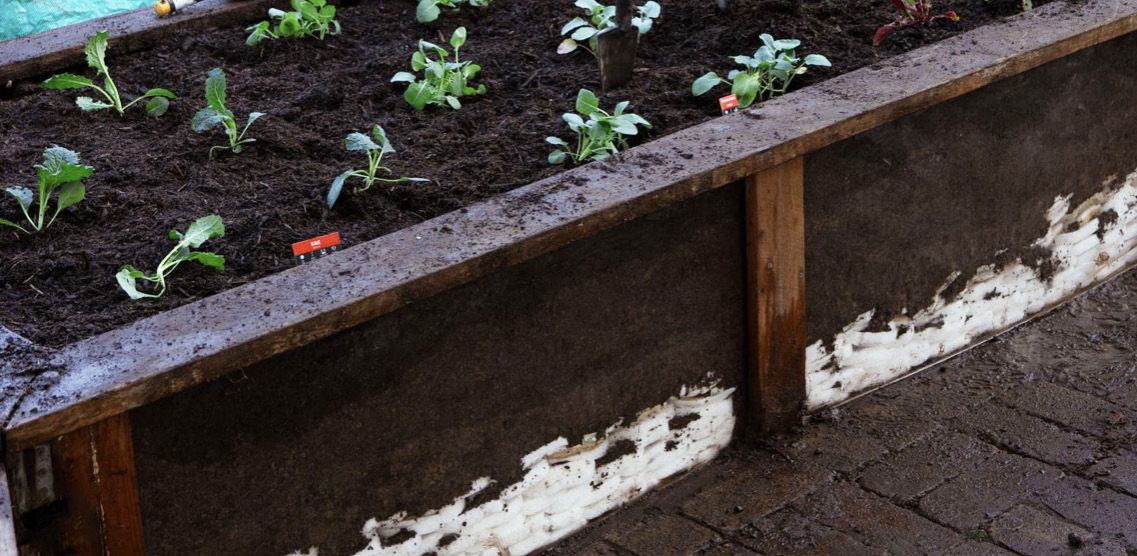
Recycled dish sponges can be used as wicking beds for gardens.
What do dish sponges and garden beds have in common? Normally not a lot, but in this instance, bringing new life. Koh, Australia’s leading eco-certified cleaning brand, has partnered with Community Gardens Australia to repurpose its biodegradable Dish Sponges into garden beds and encourage Australians to explore their green thumb and get creative in their gardens.
Earlier this year, Koh discovered its excess Dish Sponge stock, consisting of wood pulp and none of the chemical treatments usually found in traditional sponges, were nearing the end of its shelf life due to its compostable nature. With a core focus on reducing clutter and wasteful practices, Koh sought innovative solutions to avoid sending these sponges to landfill.
Teaming up with Regenerative Designer and Benoit Luc, Koh discovered a way to repurpose the sponges as moisture-rich “water banks” in wicking beds for a partnership at the Randwick site of Community Gardens Australia. The sponges retain water and nourish plants through capillary action.
In the garden, a clear panel allows visitors to witness the sponges in action and their natural decomposition into the soil.
Koh and Benoit ensured the project was scalable to fit sponges into everything, from a small pot to a large garden bed for the average Australian to create their own garden at home. Creating a new way to distribute the sponges in a way that truly benefits and gives back to the planet.
A cleaning brand partnering with Community Gardens Australia might not sound like the most natural alignment, but the pair share values around reducing waste and engaging the community through education around sustainable initiatives.
Charli Walters, CEO of Koh, said: “We’re honoured to be working with Community Gardens Australia to bring our Sponge Garden concept to life. The sponges live up to our brand’s simple, safe and sustainable promise. Because of this, we were able to work with Benoit and Community Gardens on the wicking garden designs, where our sponges could be given a second life – from cleaning up food to growing food.”