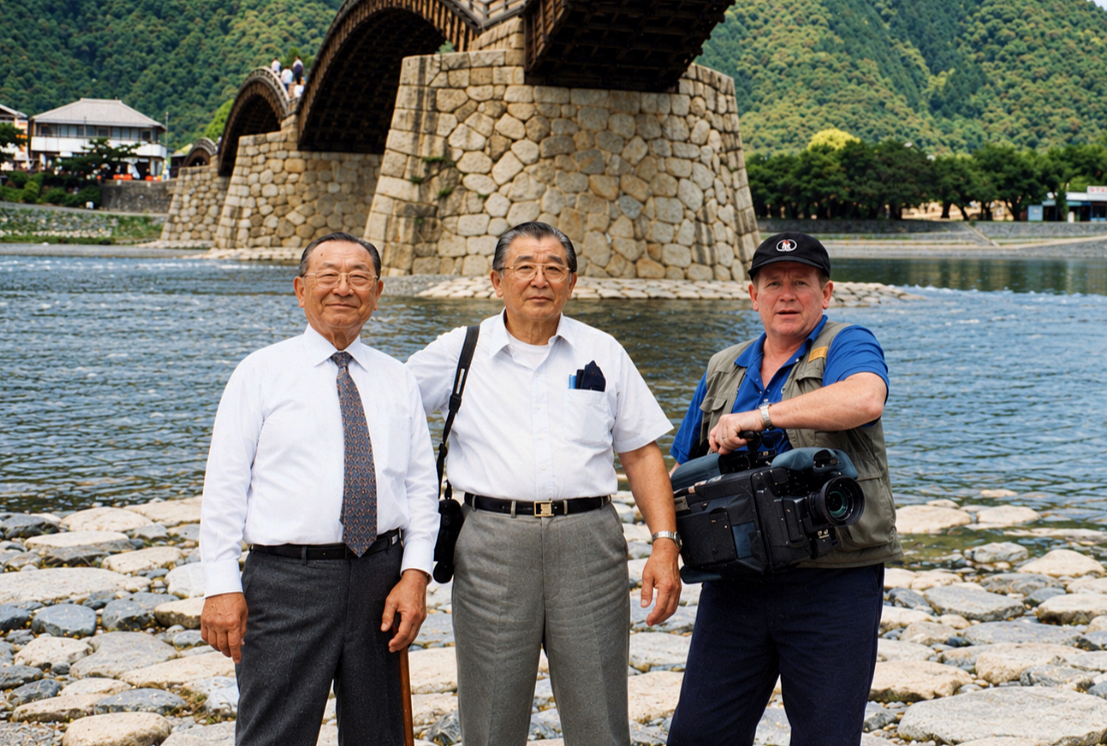
Richard Swansborough pictured in Japan with the former WW11 pilot Captain Ito Susumo.
The Central Coast’s hidden chapter in the WW2 attack on Sydney has featured on the big screen in documentary Sydney’s Spy Plane, produced by Canowindra’s Richard Swansborough.
The 55 minute film premiered at the Central Coast Film Festival, Cinema Paradiso last Sunday 15 November.
In the early hours of 30 May 1942, a Japanese spy plane was launched from a submarine off the Central Coast and flew south to scout Sydney Harbour for the midget-submarine attack the following night. According to the film, Susumu Ito’s flight was the only part of Japan’s plan that went as intended.
Eighty-four years later, the Central Coast is where the story of that aircraft is told, in a documentary made on the Central Coast about an event few locals know took place off their shore.
Sydney’s Spy Plane shows how Ito, flying a two-seat floatplane launched from a submarine lying off the Central Coast, flew low over Sydney Harbour while his observer plotted the position of Allied warships and sketched the submarine boom net.
On the return flight, in rough seas, the aircraft flipped on landing and remained floating upside down. The submarine dived and left it behind.
Fifty-two years later, in 1994, a team of Central Coast divers and wreck hunters, led by Canowindra documentary producer, wreck diver and explorer Richard Swansborough, searched the reef off Pelican Point and found the aircraft’s wreckage.
The film argues it was the very first enemy craft of any kind to be lost in action on the east coast of Australia.
The film is based on footage shot by Richard Swansborough during the 1990s search. The footage sat in storage for 28 years until filmmaker Bob Fitzgerald of Umina Beach took on the project in 2025 and completed the film in partnership with Richard in August 2026.
The film follows what happened next: in the 1990s, Heritage NSW ordered recovery work to stop, the Australian War Memorial declined to help, and the find was largely overlooked.
It also records the friendship between the late Philip Dulhunty OAM, a member of the search team, historian, seaplane pilot and president of the Seaplane Pilots Association of Australia, and the WW2 pilot, Susumu Ito, including the team’s visit to meet Ito in Japan.
The film was completed as a self-financed production.