• Home
  • Articles
    • Front Page
    • General Interest
    • Letters to the Editor
    • Snippets
  • Our Community
    • Our People
    • Question of the Week
    • Be Seen
    • Jobs in The Central West
  • Special Interests
    • Rural Round Up
    • Health & Wellness
    • Loving Local Living
    • My Place
    • Real Estate
  • Sports
    • Bowls
    • Canowindra Junior Rugby League
    • Rugby League
    • Cricket
    • Footy Tipping Competition
    • Golf
    • Rugby Union
    • Swimming
    • Touch Football Results
    • Tennis
    • Other
  • Competitions
  • Classifieds
  • Contact Us
    • Contact Us
    • Advertise with Us
    • Testimonials
    • Subscribe to the Phoenix
    • Submit an Article

The Canowindra Phoenix

Your free weekly guide to what's happening in and around Canowindra.

Home » Tips To Avoid Harvester Fires

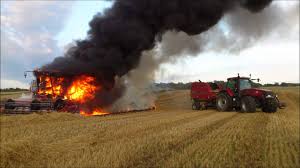
Tips To Avoid Harvester Fires

22 November, 2017 By Canowindra Phoenix Editor

There are a number of elements that add to the risk of fire on harvesting machinery. Most of these can be monitored, maintained,
addressed and ultimately fires can largely be avoided. According to Kondinin Group research, dust and trash build-up on the machine and bearing failures, together account for around half of harvester fires.

Mechanical failures are also implicated for one in 12 harvester fires. While static electricity is regularly blamed for starting harvester fires, it is largely a fallacy. While static may attract additional fuel, potentially making fires worse, static discharge does not have sufficient energy to ignite crop dust.

Reducing harvester fires requires minimisation of the fuel and the ignition source. Fuel minimisation requires regular cleandowns of the machine, particularly in dusty crops and those that have suffered mould and disease. In extreme cases a blowdown every boxful may be required. Start on the front and move to the top working down from there.

Bearing failure is the cause of one in four harvester fires. Buy an infra-red thermometer (around $50) and monitor bearing temperatures, keeping a log of discrepancies. Some pulse crop plant material can ignite at temperatures as low as 130°C. While this can vary by seasonal conditions, there are plenty of components on a harvester that exceed this. In most cases much of the
exhaust stream can exceed this.

Harvester exhaust system components can be insulated with ceramic coatings, moulded amorphous silica and insulating jackets to significantly reduce the area of high temperature. But each of these approaches has advantages and disadvantages.

(Source: GRDC.com.au)

Filed Under: Articles, Rural Round Up

Click here to download the recent issue (896) of The Canowindra Phoenix (2.1MB PDF) – 24th September 2026

Search the Phoenix

STAY CONNECTED

The Canowindra Phoenix would like to thank you, our Facebook friends, for your continued support and readership!

Contact the Phoenix

Street Address: 84 Gaskill Street Canowindra NSW 2804
Postal Address: PO Box 203 Canowindra NSW 2804
Phone:0432 337 286

Editorial Phone – 0432 337 286
editor@canowindraphoenix.com.au

Sales Phone – 0432 337 286
sales@canowindraphoenix.com.au

Submit an Article

We are always looking for new articles of interest to the local community.

Please feel free to submit an article for possible inclusion in a future issue.

To submit an article, click here to use our online article submission form.

Receive The Phoenix via Email

* indicates required

Copyright © 2026 · Website setup and support: CompleteWPCare

nsw government logo

The Canowindra Phoenix's Digital Diversification of Free Regional Media project is proudly funded by the NSW Government Regional Media Fund