• Home
  • Articles
    • Front Page
    • General Interest
    • Letters to the Editor
    • Snippets
  • Our Community
    • Our People
    • Question of the Week
    • Be Seen
    • Jobs in The Central West
  • Special Interests
    • Rural Round Up
    • Health & Wellness
    • Loving Local Living
    • My Place
    • Real Estate
  • Sports
    • Bowls
    • Canowindra Junior Rugby League
    • Rugby League
    • Cricket
    • Footy Tipping Competition
    • Golf
    • Rugby Union
    • Swimming
    • Touch Football Results
    • Tennis
    • Other
  • Competitions
  • Classifieds
  • Contact Us
    • Contact Us
    • Advertise with Us
    • Testimonials
    • Subscribe to the Phoenix
    • Submit an Article

The Canowindra Phoenix

Your free weekly guide to what's happening in and around Canowindra.

Home » Frost Ahead For Crops

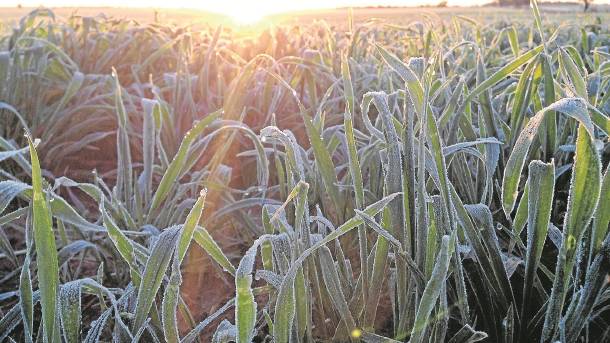
Frost Ahead For Crops

22 March, 2017 By Canowindra Phoenix Editor

Image sourced from GRDC

With winter not so far away farmers will have to consider the frost impact on their crops.

Frost occurs on clear nights throughout the winter season when the air temperature drops to two degrees celcius or less.

This can be damaging to crops especially around the flowering time.

Ice can form inside the plant tissue and as it expands it bursts the membranes, result- ing in mechanical damage and dehydration. Frost damage can lead to reduced grain yields and quality, according to the Department of Agriculture and Food.

To avoid frost farmers can opt for a frost tolerant crop or plant pastures in paddocks that have the worst frosts.

Oats are one of the best cereal crops that are least susceptible to frost damage as it can handle about 4 degrees more than what wheat or barley can.

Research is being conducted into the impact of spring frosts at the GRDC, pointing to the need for integrated management while parallel efforts continue to find a robust solution.

The aim of the project is to benchmark Australian cultivators and material sourced from frost proned regions of the world to first identify differences in frost susceptibility and then use this genetic diversity to improve yield stability of Australian cultivators.

Filed Under: Rural Round Up

Click here to download the recent issue (896) of The Canowindra Phoenix (2.1MB PDF) – 24th September 2026

Search the Phoenix

STAY CONNECTED

The Canowindra Phoenix would like to thank you, our Facebook friends, for your continued support and readership!

Contact the Phoenix

Street Address: 84 Gaskill Street Canowindra NSW 2804
Postal Address: PO Box 203 Canowindra NSW 2804
Phone:0432 337 286

Editorial Phone – 0432 337 286
editor@canowindraphoenix.com.au

Sales Phone – 0432 337 286
sales@canowindraphoenix.com.au

Submit an Article

We are always looking for new articles of interest to the local community.

Please feel free to submit an article for possible inclusion in a future issue.

To submit an article, click here to use our online article submission form.

Receive The Phoenix via Email

* indicates required

Copyright © 2026 · Website setup and support: CompleteWPCare

nsw government logo

The Canowindra Phoenix's Digital Diversification of Free Regional Media project is proudly funded by the NSW Government Regional Media Fund